
How Do Solar Panels Actually Work? The Science Explained

Key Takeaways:
- Solar panels convert sunlight into usable electricity through the photovoltaic effect
- Solar cells are made of silicon and generate an electric current when exposed to light
- Inverters convert the direct current (DC) from solar panels to alternating current (AC) used in homes
- Solar panels can significantly reduce or eliminate electric bills and have a typical payback period of 8-10 years
Have you ever thought about how solar panels turn sunlight into electricity for your home?
It might seem like magic, but it’s actually pretty easy to understand. In this article, we’ll explain the basics of how solar panels work. You don’t need to be a scientist or an engineer to get it.
By the end, you’ll know the main parts and steps that let solar panels make clean energy from the sun. Let’s jump in and explore solar power!
How Solar Panels Work
The most important thing that makes solar panels work is called the photovoltaic effect.
Let’s break it down and see how it helps solar panels power your home:
The Photovoltaic Effect
The photovoltaic effect is how solar panels change sunlight into electricity. Here’s a simple way to understand it:
- Sunlight is made of super tiny things called photons, which have energy.
- When photons hit special materials like silicon in solar cells, they give their energy to tiny particles called electrons.
- This extra energy lets the electrons move around, making an electric current.
- By putting positive and negative connectors in the solar cell, this current can be captured and used to make electricity.
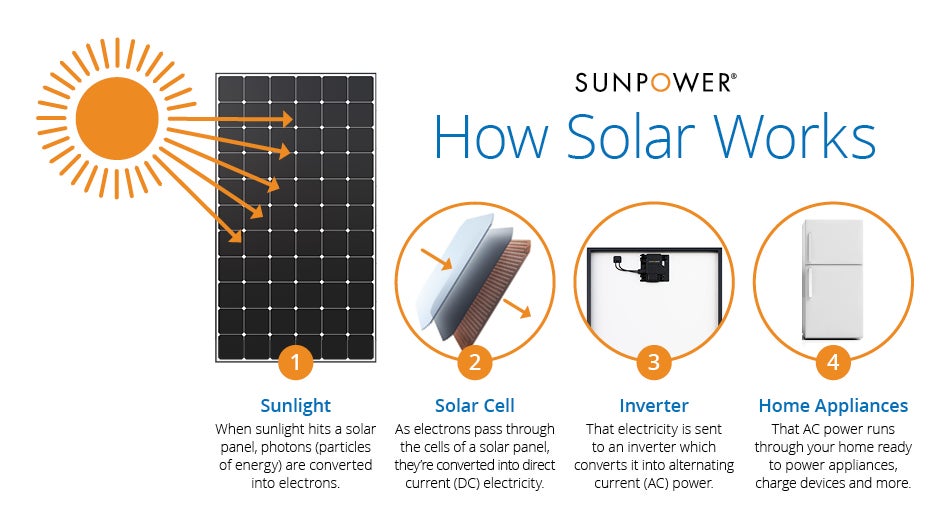
So, the photovoltaic effect is the main thing that makes solar panels possible. It was first found way back in 1839 by a French scientist named Edmond Becquerel.
He saw that some materials would make a small electric current when light hit them. More than 100 years later in 1954, scientists at Bell Labs used this effect to make the first real solar cell with silicon.
Since then, a lot of research has made solar panels better and cheaper. This lets more and more people use clean, renewable solar energy in their homes.
For a detailed breakdown of expenses, read our post on how much solar panels cost in North Carolina in 2024.
Solar Cell Composition
Solar cells are like the building blocks of solar panels. They’re made from a special type of material called a semiconductor.
Silicon is the most common semiconductor used in solar cells because it has some unique properties. Let’s take a closer look at how solar cells are put together:
- Solar cells are made of two thin layers of silicon that are treated differently.
- The top layer has tiny amounts of something called phosphorus added to it. This gives the silicon extra electrons, which makes it have a negative charge.
- The bottom layer has something called boron added to it. This makes the silicon have fewer electrons, giving it a positive charge.
- This creates an electric field between the two layers, kind of like the positive and negative ends of a battery.
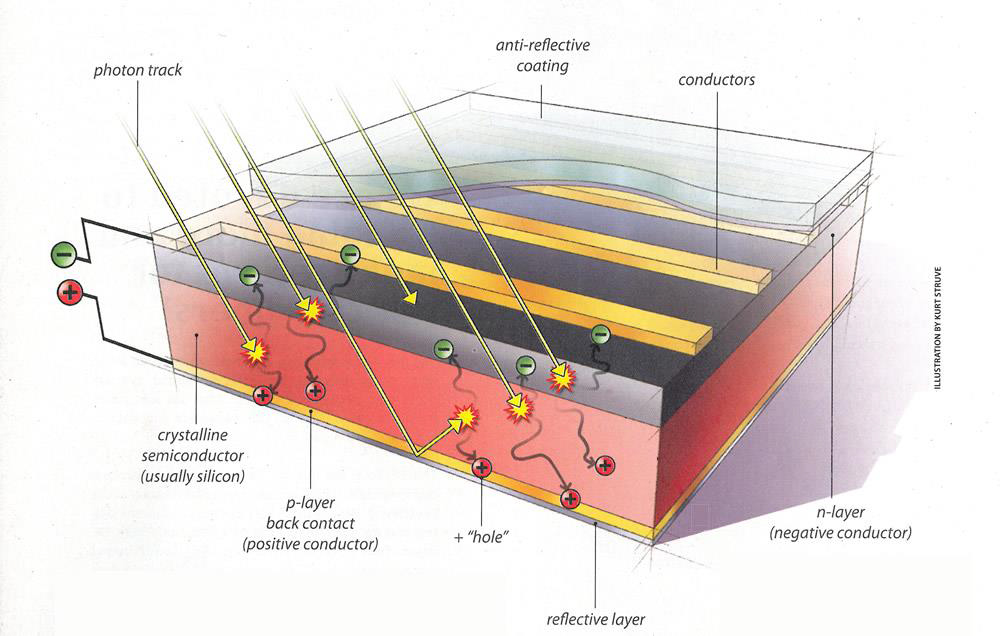
When sunlight hits the top layer of the solar cell, the photons knock some of the extra electrons loose. These electrons are then pulled across the electric field into the bottom layer, creating an electrical current.
To capture and move this current, solar cells also have metal contacts printed on their top and bottom:
- Thin metal strips crisscross the top of the cell, allowing the loose electrons to be collected.
- A flat metal contact covers the bottom of the cell to complete the circuit.
- Wires connect these contacts to the rest of the system, allowing the electricity that’s generated to flow out to an inverter and then into your home.
By connecting many individual solar cells together, solar panels are able to generate a lot of electricity from the sun’s light. In the next section, we’ll explore how solar panels and arrays are structured to power homes and businesses.
Discover all the financial benefits available by checking out our complete guide to North Carolina solar incentives, tax credits, and rebates for 2024.
Solar Panels and Arrays
While single solar cells can make electricity, they only make a small amount by themselves.
To power a whole home, solar cells need to be put together into bigger things called solar panels and arrays. Here’s how it works:
- Solar panels are made up of many single solar cells (usually 60 or 72) wired together and put in a protective glass and metal frame.
- These panels are then put on a roof or on racks on the ground to make an array.
- The number of panels in an array depends on how much electricity the home needs and how much space there is to put the panels.
- A typical home solar array might have anywhere from 10 to 40 panels, depending on the size of the home and how much electricity is used.

To give you a real-life example, let’s say a typical American home uses about 900 kilowatt-hours (kWh) of electricity per month. To cover most of this usage, the home would need a solar array that can generate around 6 kilowatts (kW) of power. If we use 250-watt solar panels, this would need an array of about 24 panels.
Of course, the exact number of panels needed will change based on things like how efficient the panels are, how much sunlight is available in the area, and how the home uses energy. Solar installers use special computer programs to design arrays that are just right for each home and its unique energy needs.
Here are a couple examples of what residential solar panel installations might look like:


As you can see, solar arrays can be mounted on various types of roofs or even installed on the ground if there’s enough space available. The key is to position the panels so they get maximum exposure to direct sunlight throughout the day.
Inverters: Converting DC to AC
Solar panels make direct current (DC) electricity, which is the same kind of electricity that batteries use. But the appliances and electronics in your home use alternating current (AC) electricity.
To make the solar energy usable, it needs to be changed from DC to AC. That’s where inverters come in.
Here’s a simple way to understand how inverters work:
- Inverters are electronic devices that change DC electricity into AC electricity.
- They take the DC current made by the solar panels and use transformers and switching circuits to create AC current.
- This AC electricity is then sent to your home’s main electrical panel, where it can be sent out to power your lights, appliances, and other devices.
There are two main types of inverters used in home solar systems:
-
String Inverters (also known as Central Inverters)
These are the most common and affordable type of inverter.
They work by combining the output of many solar panels into a single DC current, which is then changed to AC.
String inverters are reliable and work well, but if one panel is shaded or not working right, it can make the whole system perform worse.
-
Microinverters
These are smaller inverters that are put on each solar panel.
They change the DC electricity from each panel into AC right where it’s made.
This lets each panel work on its own, so shading or problems with one panel won’t affect the others.
Microinverters cost more than string inverters, but they can be a good choice for roofs with partial shading or complicated layouts.
The choice between string inverters and microinverters depends on things like how your roof is laid out and shaded, your budget, and your long-term performance goals. A qualified solar installer can help you figure out the best inverter type for your home.
Here’s a quick visual summary of how inverters fit into the overall solar energy system:
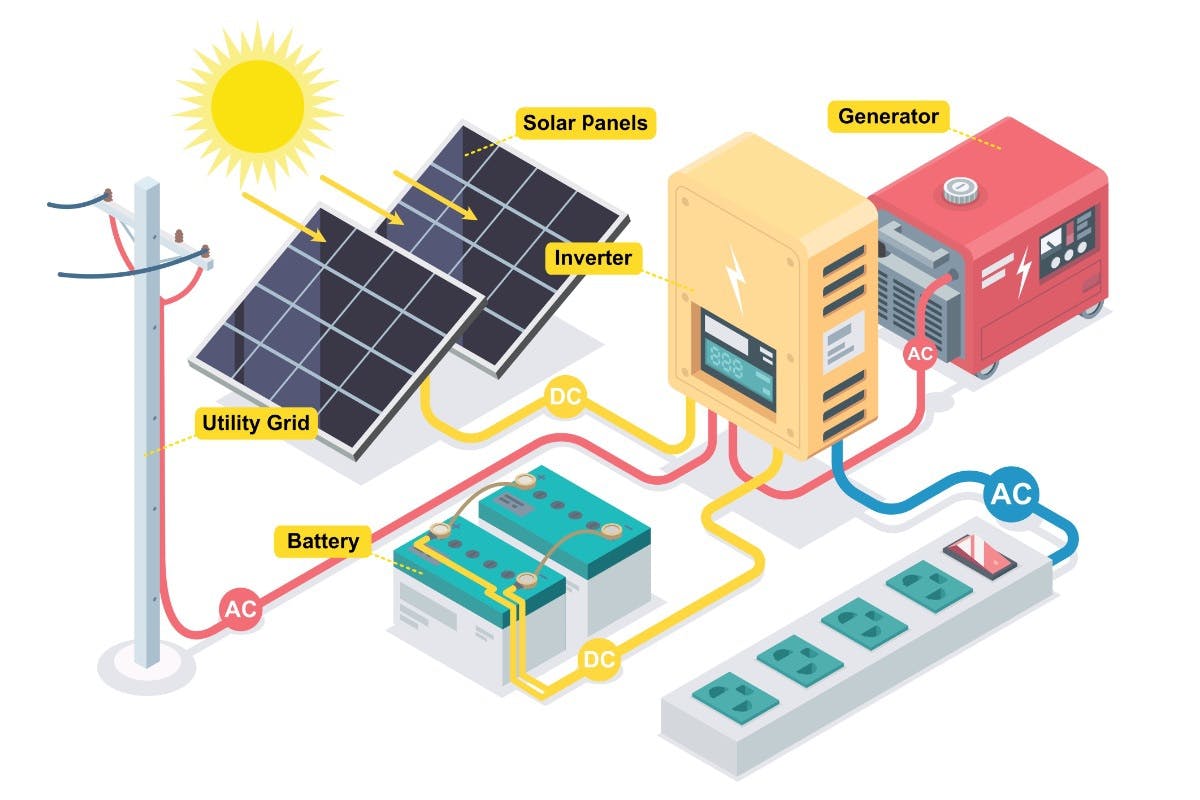
In the next section, we’ll explore what happens when your solar panels generate more electricity than your home needs, and how you can actually get credited for that excess energy through a process called net metering.
To determine if solar energy is a good investment for you, explore our article on whether solar panels are worth it in North Carolina.
Net Metering and the Grid
Once your solar panels are making electricity and your inverter has changed it to usable AC power, any energy you don’t use right away in your home is sent out to the utility grid. This is where net metering comes in.
Here’s how net metering works:
- When your solar panels make extra electricity, it is sent to the grid and your utility meter goes backwards, giving you credit.
- At night or other times when your solar panels aren’t making enough electricity for your needs, you take power from the grid and your meter goes forward.
- At the end of the billing period, you only pay for your “net” energy use, which is the difference between the amount of electricity you made and the amount you used from the grid.
Basically, net metering lets you use the grid like a giant battery. You can “store” your extra solar energy made during the day and use those credits at night or when your panels aren’t making as much power.
This is a huge benefit of staying connected to the grid with solar, as it gets rid of the need for an expensive home battery storage system in most cases.

The exact net metering rules and how credits are calculated are different in each state and utility. Some key differences include:
- Whether extra credits can be carried over from month-to-month or year-to-year.
- If credits expire after a certain amount of time.
- The exact rate at which extra solar electricity is credited compared to regular electricity prices (i.e., the value of the net metering credits).
It’s important to understand the specific net metering policy in your area, as this can have a big impact on the long-term value and payback of your solar investment. In general though, net metering is one of the key solar policies that has helped the growth of home solar across the country.
To show how big of an impact net metering can have, let’s look at a real-life example:
- The Smith family installs a 6 kW solar system on their home in California.
- Their system makes about 8,400 kWh of electricity per year.
- The Smiths use about 7,000 kWh per year in their home.
- Through net metering, they are able to bank those extra 1,400 kWh as credits.
- At the end of the year, the Smiths have almost eliminated their electricity bill, paying only a small connection fee to stay tied to the grid.
Without net metering, the Smiths would not be able to capture the full value of their solar production, and their investment would be much less economical. This is why solar advocates fight so hard to protect and expand net metering policies across the country.
Hope solar just became easier to understand (:
Let’s recap what we’ve learned about how solar panels work:
- Solar panels use the photovoltaic effect to convert sunlight into electricity
- They are made up of many individual solar cells composed of silicon semiconductors
- When sunlight hits the cells, it knocks electrons loose and creates an electrical current
- This current is captured by metal contacts and wires, then fed to an inverter
- The inverter converts the direct current (DC) electricity from the panels into alternating current (AC) electricity that can be used in your home
- Any excess electricity produced by your solar panels is sent to the utility grid, where it is credited to your account through net metering
- At night or during times of low solar production, you draw electricity back from the grid, using up those net metering credits
By putting solar panels on your home, you can greatly reduce or even get rid of your electricity bills, all while making clean, renewable energy from the sun. Solar is a smart investment that not only saves you money in the long run but also helps to reduce your carbon footprint and fight climate change.
If you’re interested in going solar, the first step is to get quotes from trusted local solar installers. They can look at your home’s solar potential, design a custom system to meet your energy needs, and give you detailed estimates of the costs and savings involved.
Going solar is a big decision, but with a basic understanding of how solar panels work, you can feel confident in taking the next steps towards energy independence and a brighter, cleaner future.

Ryan Fox is a leading solar energy consultant based in Raleigh, North Carolina. With over 10 years of experience in the renewable energy industry, Ryan has established himself as a trusted expert in helping both residential and commercial customers transition to clean, affordable solar power.
Subscribe to newsletter
Stay on top of the latest guides and tips on solar.
Related articles




Find Installers In Your City
Find the best solar installers in North Carolina in one click. Start your journey to savings today!