
Are Solar Panels Worth It in North Carolina?

Key Takeaways
- North Carolina offers generous solar incentives and tax credits
- Solar panels can significantly reduce or eliminate electricity bills
- Typical payback period of 7-10 years, 25+ year expected lifespan
- Increases home value by an average of 4.1%
- Environmentally-friendly way to power your home
Did you know that North Carolina ranks 4th in the nation for solar energy capacity?
More and more Tar Heel homeowners are making the switch to solar, and for good reason.
With rising electricity costs and growing concerns about climate change, solar panels offer an attractive solution. But is going solar really worth it in North Carolina?
The short answer is yes!
For most North Carolina residents, installing solar panels is a smart financial investment that can save you tens of thousands of dollars over the lifespan of your system.
Plus, you’ll be doing your part to reduce your carbon footprint and promote clean, renewable energy. Let’s dive into the details.
Financial Incentives and Savings: A Bright Spot for NC Solar Adopters
One of the biggest reasons solar is such a great investment in North Carolina is the array of financial incentives available. Let’s break them down:
Federal Tax Credit: The U.S. government offers a generous 26% tax credit for solar installations. For example, if your system costs $20,000, you’d be eligible for a $5,200 credit on your federal taxes.

North Carolina State Tax Credit: On top of the federal incentive, North Carolina offers a 35% state tax credit, up to a maximum of $10,500. So for that same $20,000 system, you could claim an additional $7,000 on your state taxes.
Net Metering and Utility Rebates: Many North Carolina utility companies, like Duke Energy, offer net metering programs. This means that any excess electricity your solar panels generate gets sent back to the grid, and you receive credit on your bill. Some utilities also offer upfront rebates for going solar.
So what does this all add up to? Let’s look at an example.
Sarah, a homeowner in Raleigh, installed a 6 kW solar system on her roof. The total cost was $18,000, but after claiming the federal and state tax credits, Sarah’s out-of-pocket cost was just $5,800.
Now, Sarah’s system generates almost all the electricity her family needs, saving her an average of $850 per year on her energy bills. Over the 25+ year lifespan of her solar panels, Sarah can expect to save over $21,000!
Of course, exact savings will vary based on factors like electricity rates, energy usage, and the size and orientation of your roof. But the bottom line is, the financial incentives available in North Carolina make solar a very attractive investment for most homeowners.
Payback Period and ROI: How Long Until Solar Pays Off?
When considering any major home improvement, one of the first questions you probably ask is, “How long will it take for this investment to pay for itself?” In the solar industry, this is known as the payback period.
Understanding Payback Period
Simply put, the payback period is the amount of time it takes for your cumulative energy savings to equal or exceed your initial investment in solar panels. In other words, it’s the break-even point where your savings have covered the upfront cost of your system.

Typical Payback Period in North Carolina
So, how long does it usually take for solar panels to pay for themselves in North Carolina?
For most homeowners, the payback period ranges from 7 to 10 years. That means that after 7-10 years of enjoying reduced (or even eliminated) electricity bills, you’ll have recouped your initial investment. Everything after that is pure savings!
Several factors can influence the length of your payback period:
- Electricity rates: Higher local electricity prices mean greater potential savings, which can shorten your payback time.
- Incentives: Taking advantage of federal, state, and local incentives can significantly reduce your upfront costs, leading to a faster payback.
- System size: A larger system will generally have a higher price tag but will also generate more electricity, allowing you to save more on your bills.
- Energy consumption: The more electricity you use, the more you stand to save by going solar.
Long-Term Savings
It’s important to remember that solar panels are a long-term investment. Most systems are designed to last 25-30 years or more. So even if your payback period is on the longer side, say 10 years, you’ll still enjoy at least 15 years of “free” electricity once you hit that break-even point.
Over the lifespan of your system, those savings can really add up. Remember Sarah from our earlier example? Even after accounting for her initial investment, she’s on track to save over $15,000 in the long run. That’s a significant chunk of change!
Solar vs. Other Home Improvements
So how does solar stack up against other common home improvements in terms of ROI (return on investment)? Pretty favorably, it turns out.
According to Remodeling Magazine’s 2020 Cost vs. Value Report, most midrange home improvements have an ROI in the 50-70% range. For example, a minor kitchen remodel typically recoups about 77.6% of its cost in added home value.
Solar, on the other hand, often sees an ROI of 100% or more over its lifespan due to the ongoing energy savings. Plus, as we’ll explore in the next section, solar panels can also increase your home’s value, giving you an extra boost on your investment.
While the upfront cost of going solar may seem steep, the long-term financial benefits are hard to beat. When you factor in North Carolina’s friendly solar policies and incentives, a 7-10 year payback period and decades of savings make solar a smart choice for many Tar Heel homeowners.
Increased Home Value: Solar Panels as a Smart Investment
When you’re making improvements to your home, you’re not just investing in your quality of life; you’re also investing in your property’s value. And as it turns out, solar panels can be a great way to boost your home’s worth.
The Solar Premium
According to a recent study by Zillow, the leading online real estate marketplace, homes with solar panels sell for an average of 4.1% more than comparable non-solar homes. That’s a significant premium, and it’s even higher in some markets.
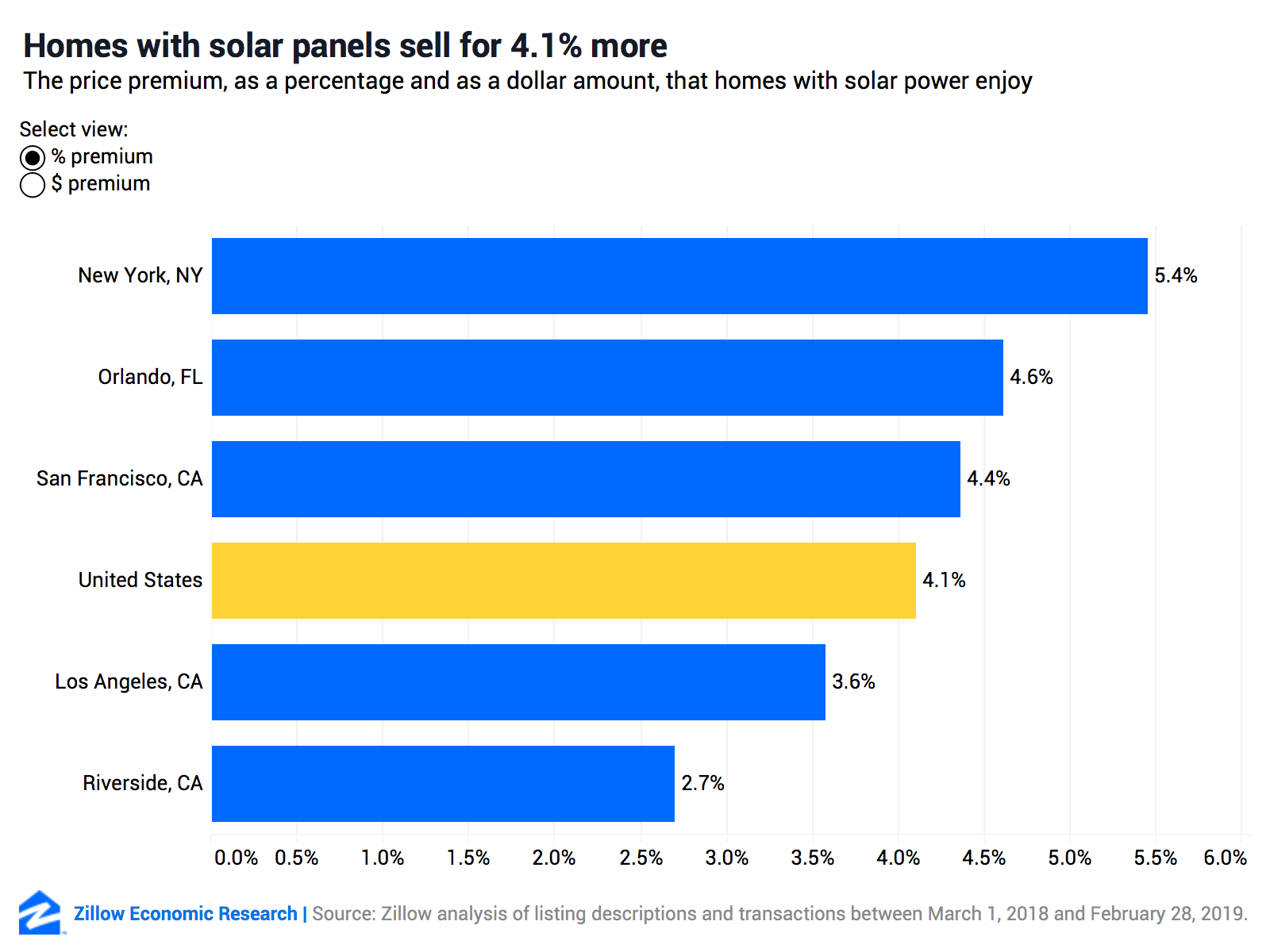
So what does that look like in dollars and cents? Let’s consider the median home value in North Carolina, which as of 2024 is around $240,000. If you installed solar panels on a median-priced home, you could potentially increase its value by $9,840. That’s a substantial chunk of change!
Solar as a Home Upgrade
So why are buyers willing to pay more for homes with solar? It’s simple: they recognize the value of solar as a home upgrade. Just like a renovated kitchen or a new roof, solar panels are seen as a desirable feature that can improve a home’s livability and financial prospects.
Think about it from a buyer’s perspective. When you purchase a home with solar panels already installed, you’re not just getting a place to live; you’re also getting a built-in way to save on your energy bills. It’s like the previous owner has handed you a coupon for discounted electricity for the next 25+ years. That’s an attractive proposition for many buyers.
The Importance of Ownership
It’s worth noting that this solar premium generally applies to owned systems, not leased ones. When you own your solar panels (either by purchasing them outright or financing them with a loan), you’re adding a tangible asset to your property.
In contrast, leased systems are often seen as a liability, as the new homeowner would need to take over the lease payments.
Making Solar Part of Your Home’s Story
If you do decide to go solar, be sure to make it part of your home’s story when it comes time to sell.
Work with your real estate agent to highlight the benefits of your solar system in your listing. You might include details like:
The size of your system and its estimated annual electricity production
The age of your system and any warranties that will transfer to the new owner
An estimate of the annual savings the new owner can expect based on current electricity rates
By showcasing your solar panels as a valuable asset, you can potentially attract more buyers and command a higher price for your home.
The Bottom Line
Installing solar panels on your North Carolina home is not just a way to save on your energy bills; it’s also a smart investment in your property’s value.
With buyers increasingly recognizing the benefits of solar, you could potentially see a significant return on your investment when it comes time to sell.
Of course, the exact premium you’ll see will depend on factors like the size and age of your system, the local real estate market, and the overall desirability of your home.
But with Zillow’s data showing an average 4.1% boost, there’s a good chance that going solar will pay off not just in energy savings, but in increased home value as well.
As you weigh the decision to go solar, be sure to factor in this potential home value increase along with the other financial incentives and savings we’ve discussed. It could be the extra nudge that makes solar a clear win for you and your family.
Common Questions About Going Solar in North Carolina
How does net metering work in North Carolina?
Net metering is a policy that allows solar homeowners to send excess electricity back to the grid in exchange for credits on their utility bills. In North Carolina, all investor-owned utilities (like Duke Energy) are required to offer net metering to their customers.
Under North Carolina’s net metering policy, solar homeowners are credited for their excess electricity at the full retail rate. These credits can be used to offset future electricity charges. At the end of the year, any unused credits are carried forward to the next year.
For more details on North Carolina’s net metering policy, visit the NC Clean Energy Technology Center’s website
Is North Carolina a good state for solar?
Yes, North Carolina is an excellent state for solar energy. Here are a few reasons why:
- Abundant Sunshine: North Carolina ranks in the top half of U.S. states for solar insolation, meaning it receives a good amount of direct sunlight year-round.
- Supportive Policies: As we’ve seen, North Carolina offers generous incentives for going solar, including a state tax credit and mandatory net metering.
- Strong Solar Industry: North Carolina is home to a thriving solar industry, with numerous installers and manufacturers operating in the state. This competition helps keep prices down for consumers.
- Rising Electricity Prices: North Carolina’s electricity rates have been rising steadily in recent years, making solar an increasingly attractive option for homeowners looking to save on their energy bills.
Will solar panels damage my roof?
This is a common concern, but when installed properly, solar panels should not damage your roof. In fact, they can even provide protection by shielding your roof from the elements.
Professional solar installers take great care to ensure that your roof is not damaged during the installation process. They use specialized mounting equipment that is designed to be minimally invasive and maintain the integrity of your roof.
It’s important to note that your roof should be in good condition before installing solar panels. If your roof is nearing the end of its lifespan or needs repairs, it’s generally best to address those issues before going solar.
What happens if I sell my home with solar panels?
If you own your solar panels (rather than leasing them), they can be a valuable selling point when you put your home on the market. As we discussed earlier, homes with solar panels tend to sell for a premium compared to non-solar homes.
When you sell your home, your solar panels and all associated warranties will typically transfer to the new owner. This can be an attractive feature for buyers who are looking to save on their energy bills and reduce their carbon footprint.
If you have a leased solar system, the process can be a bit more complicated. You’ll need to either transfer the lease to the new homeowner (which requires their approval and credit check) or buy out the remainder of the lease before selling.
It’s a good idea to discuss your solar system with your real estate agent when you’re preparing to sell your home. They can help you highlight the value of your panels in your listing and navigate any transfer or buyout processes.
Additional Resources
- North Carolina Solar Energy Association – A non-profit organization dedicated to promoting solar energy in North Carolina.
- North Carolina Sustainable Energy Association – Advocates for clean energy policies and industry growth in North Carolina.

Ryan Fox is a leading solar energy consultant based in Raleigh, North Carolina. With over 10 years of experience in the renewable energy industry, Ryan has established himself as a trusted expert in helping both residential and commercial customers transition to clean, affordable solar power.
Subscribe to newsletter
Stay on top of the latest guides and tips on solar.
Related articles



Find Installers In Your City
Find the best solar installers in North Carolina in one click. Start your journey to savings today!